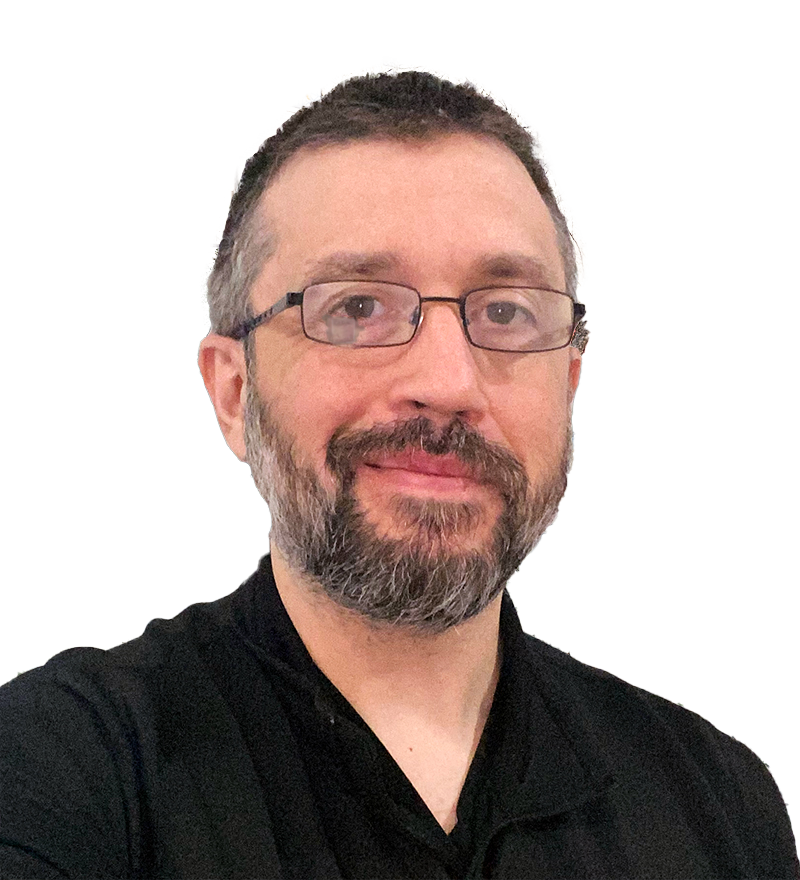
About Philip

Philip Fizur is the Associate Director of Information Technology at Temple University in the College of Liberal Arts. Since 1999 he has also worked as an independent technology consultant as well as the director of technology for a leading Philadelphia-based video game publisher. His areas of expertise include web application development and networking as well as technical support for a wide variety of popular applications and hardware architectures. His latest interests include incorporating emerging technologies into clinical research and mental health treatment. 


Philip resides in Haddon Heights, NJ with his loving wife Heather and son P.J. When not engaged in professional or academic endeavors Philip enjoys music (both as a passive listener an active performer), cooking, reading, and photography. More information is available at this web site or by emailing phil@fizur.com

Children With Brain Injuries Have Problems With Story-Telling, Study Suggests

From Science Daily: "Children with brain injuries have difficulty developing story-telling skills even though other language abilities, such as vocabulary, tend to catch up with other children as they mature, research at the University of Chicago shows. "Our findings suggest that there may be limitations to the remarkable flexibility for language functions displayed by children with brain injuries," said Özlem Ece Demir, a researcher at the University of Chicago and lead author of a paper reporting the research. It is estimated that 1 in 4,000 infants has a brain injury known as pre- or perinatal brain lesions, mainly as a result of stroke, with risk factors involving both mothers and babies." [More]

Why More Education Lowers Dementia Risk

From Science Daily: "A team of researchers from the UK and Finland has discovered why people who stay in education longer have a lower risk of developing dementia -- a question that has puzzled scientists for the past decade. Examining the brains of 872 people who had been part of three large ageing studies, and who before their deaths had completed questionnaires about their education, the researchers found that more education makes people better able to cope with changes in the brain associated with dementia. Over the past decade, studies on dementia have consistently showed that the more time you spend in education, the lower your risk of dementia. For each additional year of education there is an 11% decrease in risk of developing dementia, this study reports." [More]

The Art of Now: Six Steps to Living in the Moment

From Psychology Today: "A friend was walking in the desert when he found the telephone to God. The setting was Burning Man, an electronic arts and music festival for which 50,000 people descend on Black Rock City, Nevada, for eight days of "radical self-expression"—dancing, socializing, meditating, and debauchery. A phone booth in the middle of the desert with a sign that said "Talk to God" was a surreal sight even at Burning Man. The idea was that you picked up the phone, and God—or someone claiming to be God—would be at the other end to ease your pain. So when God came on the line asking how he could help, my friend was ready. "How can I live more in the moment?" he asked. Too often, he felt, the beautiful moments of his life were drowned out by a cacophony of self-consciousness and anxiety. What could he do to hush the buzzing of his mind? "Breathe," replied a soothing male voice." [More]

How Technology May Improve Treatment for Children With Brain Cancer

From Science Daily: "A study presented at the 52nd Annual Meeting of the American Association of Physicists in Medicine (AAPM) shows that children with brain tumors who undergo radiation therapy (the application of X-rays to kill cancerous cells and shrink tumors) may benefit from a technique known as "intensity modulated arc therapy" or IMAT. This technique relies upon new features on the latest generation of X-ray therapy equipment that allow X-ray sources to be continuously rotated in any direction around a patient during treatment, potentially increasing the number of directions that the beams come from. The study, which was conducted by medical physicists at St. Jude Children's Hospital in Memphis, TN, compared different treatment strategies including IMAT for nine children treated with radiation therapy for brain tumors. It showed that IMAT could irradiate these tumors effectively while overall reducing the exposure to the surrounding tissue." [More]

Do you have a digitial addiction?

From Psychology Today: "Hours-long Internet surfing that contributes to severe weight loss or gain, obsessive e-mail checking and freaking out (beyond the initial few minutes) when your cell phone goes missing may be signs that you have a digital addiction. Executive Director Cosette Dawna Rae, MSW, LSWAIC heads up an Internet addiction recovery program called RESTART in Washington State. It is the first of its kind in the United States, although not the first in the world. China has long since recognized the addictive nature of the Internet with youth programs designed to help video game addicts regain their footing. The program's Web site even has a helpful survey for those who think they, or someone they love, may have an addiction. If you answer ‘no' to most of the questions, you're out of the woods." [More]

Expecting the unexpected does not improve one's chances of seeing it

From the University of Illinois: "A new study finds that those who know that an unexpected event is likely to occur are no better at noticing other unexpected events – and may be even worse – than those who aren’t expecting the unexpected. The study, from Daniel Simons, a professor of psychology and an affiliate of the Beckman Institute at the University of Illinois, appears this month as the inaugural paper in the new open access journal i-Perception. The study used a new video based on one used in a now-famous experiment conducted in the late 1990s by Simons and his collaborator, Christopher Chabris, now a psychology professor at Union College in New York. In the original video, two groups of people – some dressed in white, some in black – are passing basketballs back and forth. The study subjects were asked to count the passes among those dressed in white while ignoring the passes of those in black. (To test your own skill at this task, stop reading and visit here.)" [More]

A Psychiatrist's Prescription For His Profession

From NPR.org: "Two years ago, psychiatrist Daniel Carlat wrote a piece in the New York Times Magazine called Dr. Drug Rep, in which he told his story of being paid to push the anti-depressant Effexor to his colleagues. Carlat joins Fresh Air contributor Dave Davies today to talk about his new book, called Unhinged: The Trouble With Psychiatry. But the book isn't just concerned with the influence of drug companies in the profession. Carlat believes in prescribing medication, but he says too many psychiatrists have all but abandoned talk therapy — leaving in-depth interaction with patients to others — while they pursue medical fixes for mood problems and mental disorders." [More]

How facts backfire

From the Boston Globe: "It’s one of the great assumptions underlying modern democracy that an informed citizenry is preferable to an uninformed one. “Whenever the people are well-informed, they can be trusted with their own government,” Thomas Jefferson wrote in 1789. This notion, carried down through the years, underlies everything from humble political pamphlets to presidential debates to the very notion of a free press. Mankind may be crooked timber, as Kant put it, uniquely susceptible to ignorance and misinformation, but it’s an article of faith that knowledge is the best remedy. If people are furnished with the facts, they will be clearer thinkers and better citizens. If they are ignorant, facts will enlighten them. If they are mistaken, facts will set them straight." [More]

Intelligence: The Evolution of Night Owls

From Psychology Today: "Night owls are smarter than other people, and now we may know why. The modern world contains many features our slow-to-evolve brains still find unfamiliar—cars, TVs, hot dogs on a stick. But the world has always thrown new stuff at us, and brighter humans may adapt more ably. Satoshi Kanazawa, a psychologist at The London School of Economics and Political Science, argues that, while we have specialized mental modules for navigation, social interaction, and other age-old tasks, general intelligence is its own module handling only evolutionarily novel circumstances. And he has data showing that people with higher IQs are more likely to have values and preferences that just didn't make sense for our ancestors to embrace. One of those is staying up late." [More]

Syndicate content